
Tales From The Americas
Folktales from the Americas are unique because so many story-worlds met on the same ground and kept talking, sometimes in harmony, sometimes in conflict. Indigenous tales hold deep ties to land, seasons, animals, and kinship, where a river, a raven, or Coyote can be teacher as much as character. Settler stories brought Old World motifs, saints and sinners, witches, devils, and hard-won frontier humour. In the overlap you get new hybrids, tall tales, cautionary legends, and place-names that explain why a cliff, lake, or trail matters. Together they map survival, injustice, resilience, and wonder, and they remind us whose voices were silenced.

First Nations Tales
From North America
The traditional stories of Indigenous peoples across continental North America arise from thousands of distinct nations, languages, homelands, and ways of understanding the world. From Arctic ice and Pacific rainforests to deserts, woodlands, mountains, and plains, each storytelling tradition carries the character and knowledge of its own place. Animals, plants, waters, weather, ancestors, and powerful other-than-human beings often act with purpose, binding human life to a wider community of relations. Stories may explain origins, preserve history, guide ceremony, entertain, or teach the responsibilities of courage, humility, generosity, and kinship. Tricksters bring disorder and laughter, revealing truths through appetite, pride, ingenuity, and failure. Although no single description can contain such immense diversity, these living traditions share a profound capacity to carry identity, memory, and survival from one generation to the next.


First Nations Tales From
Alaska And The Arctic
The traditional stories of Alaska Native and circumpolar Indigenous peoples belong to many distinct cultures, languages, and homelands stretching across Alaska, Canada, Greenland, Sápmi, and northern Russia. Their worlds are shaped by sea ice, tundra, forests, mountains, and the dramatic return and disappearance of light. Animals are often powerful relations rather than mere characters, while winds, waters, ancestors, and unseen beings demand respect. Ravens, shamans, hunters, giants, and transforming creatures bring humour, danger, wonder, and instruction. Many tales carry knowledge of weather, travel, hunting, hospitality, restraint, and the careful sharing of resources. Though these traditions cannot be reduced to one Arctic voice, they preserve distinctive histories and identities while affirming a common truth: survival depends upon attentiveness, reciprocity, and right relations with a living world.

Tales From North American Settlers
The tales carried by settlers to continental North America from the seventeenth century onward grew from many European, African, Asian, Latin American, Middle Eastern, and other global traditions. Some arrived with colonists and migrants seeking land or opportunity; others survived forced migration, enslavement, exile, or displacement. Old-world ghosts, saints, witches, tricksters, heroes, and omens took on new lives in forests, ports, mining camps, farms, rail towns, plantations, and expanding cities. Stories crossed linguistic and cultural boundaries, changing through contact while also reflecting conflict, inequality, and the violence of colonisation. They celebrated endurance and reinvention, mocked authority, explained unfamiliar places, and preserved memories of distant homelands. Rather than forming a single settler folklore, these interwoven traditions reveal how generations of newcomers imagined belonging within a continent already inhabited, named, and storied by Indigenous peoples.
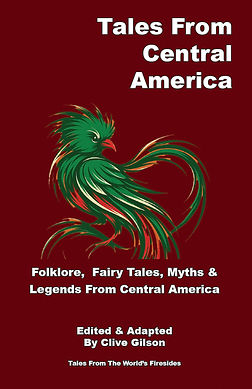
Tales From Central America
Central American folktales are fascinating because they stem from a meeting of worlds, where Maya and other Indigenous traditions, later braided with Spanish, African, and Caribbean influences, then were reshaped again by each community that told them. They carry rainforests, volcanoes, cenotes, and maize fields in their bones, with animals, spirits, and ancestors moving close to everyday life. You meet tricksters and shape-shifters, guardian beings, and moral tales that prize cleverness, respect, and balance with the land. Many stories explain why things are the way they are, while also carrying memories of survival, resistance, and celebration, told with warmth and bite.

Tales From The South America
South American folktales feel unique because they are a melange of Indigenous cosmologies, African diasporic traditions, and European influences, colliding and blending into something new. The landscape is never just a backdrop; rainforest, mountain, desert, and river are living forces, full of spirits, warnings, and bargains. You get shapeshifters, water beings, tricksters, jaguars, condors, and saints, with stories that explain why the world looks as it does and how to live inside it. There’s a strong sense of community and survival, but also mischief, beauty, and awe, threaded through everyday life.

Tales From The Caribbean
Caribbean folktales were forged in motion, in islands shaped by forced migration, survival, and constant exchange. African story-craft met European fairytales, Indigenous memory, and the hard realities of plantation life, then turned into something quick-witted, musical, and fiercely alive. Tricksters like Anansi, Brer-style figures, and local heroes thrive here, using brains, humour, and nerve to outmanoeuvre power. The language is part of the magic too, full of Creole rhythms, proverb-sharp turns, and call-and-response energy that begs to be spoken aloud. These tales hold joy and grief together, and still make room for laughter.